
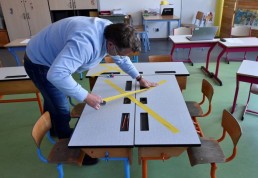
Covid19 update
We have certainly, as an organisation, found ourself in uncertain times but as a result we have found a creative means of approaching a difficult situation and are beginning to run courses online. I'm a strong believer that our business thrives due to our strict guidelines of only employing medical and emergency professionals and we are now in a position whereby they may also teach remotely, which is something I never envisaged. We are currently updating our training risk assessment regarding face-to-face training - please get in touch if you need further details.
Please see the following statement regarding anaphylaxis training:
Due to the current situation, we have launched the facility to run our anaphylaxis and epipen training course online.
You will need access to a laptop or smartphone to complete the course. We will provide you with trainer pens and a stamped address envelope to post them back to us.
There are three options for online learning:
Option 1: e-learning: The coursework is accessed remotely via our secure platform. Each module is presented as a series of slides / texts. There are a series of questions at the end of each module and also a final multiple-choice paper to complete your course. You are able to then print your own certificate or we may send you a printed copy if it is preferable. This course is also suitable for those with a hear impairment.
Option 2: Group Zoom / Microsoft Teams: The course is presented as a lecture. You are able to engage with the tutor (medical professional). Due to the nature of training, this is not advisable is your level of English requires translation. Your tutor will guide you through the safe usage of the trainer pens and will then need to see you practice demonstrating using them. Please allow an hour to complete this training as a group.
Option 3: Private Zoom / Microsoft Teams: Please let us know what date(s) suit you. The course is presented as a discussion with yourself and the tutor. The course will give you ample time to discuss every aspect of the course in relation to your previous experiences. If you need a translator, or if you are overseas, this is the perfect set up for you.
All our courses may be run at during school hours / after hours / weekends at no additional fee.

New course update: PPE Training for Schools Nurseries and Daycare settings
This training course provides you with the knowledge and practice needed to safely use personal protective equipment (PPE) to prevent the transmission of viruses, diseases, and infections.
The course provides practical guidance in how to store, use and dispose of PPE equipment safely in a childcare setting.
This course complies with the current advice jointly released by Public Health England, the NHS and the Department of Health and Social Care for the use of medical PPE during COVID-19.
Training is delivered by a registered UK medic and highly experienced trainer. We run small groups, back-to-back at no extra cost. Training may be delivered during the day or after school hours.
Course Content:
The course includes practical demonstrations of how to put on, take off, dispose of, and store the following PPE equipment:
- gloves
- facemarks
- respirators
- eye protection
- aprons and long sleeved gowns
- head and foot protection
Course duration:
- 1 hour per group. We are able to run groups back-to-back at no additional cost
Certification:
- Certificates valid for 1 year
The course guidelines will reference the Department of Health, The Department of Education and will also reference your school's individual risk assessment.
We have just completed our training and I cannot recommend it high enough. Many of our staff were anxious about using PPE correctly. The trainer not only showed us a vast variety of equipment available but made us feel at ease and confident to use them
St Mary Magdalen's Catholic Junior School. London
Spare Auto-Injectors for Schools
The new legislation will be in force from the 1st October 2017 enabling emergency adrenaline auto-injectors to be available in schools (similar to the arrangement currently in place for asthma inhalers). Allergy UK have a new and helpful website for parents, pupils and school staff explaining more about this new system and offering loads of helpful advice to people wanting more information about allergy and anaphylaxis.
The new auto-injectors are for children who are known to have a history of anaphylaxis and have already been prescribed an auto-injector. These spare auto-injectors are for emergency treatment when their device is unavailable; because it is out of date, not immediately to hand, faulty… or they require an additional dose following the administration of their own auto-injector. This new legislation allows school staff to administer an emergency AAI to any child who has been assessed as being at risk of anaphylaxis. The legislation is not compulsory for schools.
Schools in the UK can now buy auto-injectors from pharmacies without a prescription and to keep these as spare adrenaline auto-injectors (AAIs) for emergency use. AAIs deliver a potentially life-saving dose of adrenaline in the event of a severe allergic reaction (anaphylaxis).


Plug socket covers...safety awareness

As a childcare provider, should you or shouldn't you use plug socket covers?
It one thing having members of staff who know what to do in a medical or first aid emergency, but a great deal of incidences in the early years setting may be avoided. It's uncommon to find a nursery which allows staff to have hot drinks in the classroom and yet there are still many premises reluctant to remove plug socket covers...are they safer than leaving the plug open? Our understanding is that the British plug socket is designed to stop children injuring themselves and by using a plug socket cover, you may actually be increasing the risk to a child, by making the socket live...
Here's what the authorities say...
OFSTED
Ofsted State"Ofsted neither recommends nor prohibits the use of socket covers; instead we look at how registered providers ensure their premises are as safe as possible for children. It is for the provider to decide as part of the risk assessment they carry out at their premises how best to protect children from dangers associated with electric sockets and appliances. Providers may wish to consult the Royal Society for the Prevention of Accidents (ROSPA) and Child Accident Protection Trust websites for information to help them make a decision about the use of socket covers."
The ROSPA advice can be found at: http://www.rospa.com/homesafety/advice/electricity/policy.html
The Childcare Accident Protection Trust advice can be found athttp://www.capt.org.uk/parents/safety-advice/electrical-safety.html
Should you require further assistance please do not hesitate to contact us.
Regards
Ruth Molyneux
Ofsted - National Business Unit
TEL: 0300 1231231
Department of Health
13A Electrical socket inserts (socket covers or protectors)
This Alert is issued to highlight how, in certain circumstances, the use of plastic 13A (13 amp) electrical socket inserts (sold as safety accessories) can overcome the safety features designed into socket outlets.
13A electrical socket inserts should not be used in health or social care premises, nor supplied for use in a home or residence. Any socket inserts currently in use should be withdrawn from use and responsibly disposed of.
ROSPA
ROSPA The Royal Society for the Prevention of Accidents states"RoSPA recommends that small children are warned to keep away from electrical equipment until they are capable of understanding the risks and are able to use it safely.
Modern 13-amp power sockets made to BS 1363:1995 incorporate a shutter mechanism, which prevent inappropriate access to the live connectors. RoSPA therefore does not consider it necessary to recommend the use of socket covers.
RoSPA actively discourages the use of decorated socket covers, which are attractive to young children." more::
CAPT
Child Accident Prevention Trust CAPT states " Electric sockets are less dangerous than you might think. They’re designed to prevent toddlers (and anyone else) getting shocks, so they’re quite safe. You do not need socket covers to make them safe, but they might stop young children plugging in appliances that can cause a fire. However, it’s much safer to put appliances away rather than rely on socket covers."
Our paediatric first aid courses for schools and nurseries focus on preventing incidents, rather than merely treating them...we have teams of medics running paediatric courses nationwide, all our courses include anaphylaxis and epipen training. To find out more, please contact us here: contact
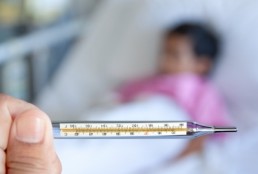
Febrile Convulsions
Between 2-4 percent of infants aged 6 months to 5 roughly years will have a febrile seizure at some point. The seizures are caused by the child overheating (either as a result of a fever or from wearing too many layers in a warm environment). The child will become unconscious. They may go rigid, their eyes might roll back and often they will twitch down one side of their body. They may also stop breathing for up to 30 seconds. The fit usually lasts less than 3 minutes and never more than 5 minutes.
As you can imagine, it is extremely frightening for the parent to witness but it is important to remember the child will have no memory of the seizure and provided they are treated in the correct manner, no lasting effect.
What to do if your child has a febrile convulsion:
- Call for help – ask anyone else who is with you to get you a bowl of tepid water, open the windows/doors and grab the phone (should you need to call the emergency services). Make a note of the time they started to fit.
- Ensure they are safe – place them onto a towel and remove their clothing. Don’t hold them down or place anything in their mouth.
- To bring their temperature down, cool the room, loosen their clothing, and give paracetamol or ibuprofen according to the instructions.
- Once they have stopped fitting, place them onto their side (in the recovery position).
- Your child may need to be treated or investigated in hospital to rule out
problems other than a febrile convulsion, especially if this is their first seizure.
- If the child has been fitting for 3 minutes or it’s their first seizure, then call 999 for an ambulance and continue to monitor their breathing.

Disclaimer: All content within First Aid for Schools is provided for general information only, and should not be treated as a substitute for the medical advice of your own doctor or any other health care professional.
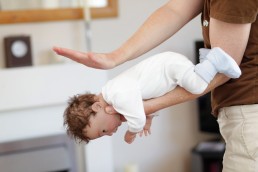
First aid courses launched to cut the number of asphyxia cases with Schoolchildren
According to a recent survey from the Children’s Accident Prevention Trust, each year over 10,000 children between the ages of 5 and 14 are admitted to hospital through choking. Following these shocking statistics, a new organisation called ‘First Aid For Schools’ has been set up in an attempt to combat these figures by increasing the number of trained first aiders available in schools.
The law currently states that only one qualified First Aider needs to be on-site at any one time. However, with school sizes constantly increasing and the fact that it only takes 2 minutes for a child to go unconscious through choking, these statistics are in danger of growing unless more schools incorporate courses provided by the likes of ‘First Aid For Schools’.
Kitty Sullivan, founder of First Aid for Schools, said, “I have constantly been shocked at the poor standards of first aid training in schools and nurseries. I started this organisation as a worried mother, shocked that only 2 out of the 20 schools in my catchment area had qualified first aiders above the government minimum.”
Ofsted, states that all those working with under 4s are required to hold a valid 12-hour paediatric First Aid certificate. Why is it that only under 4s have this level of care when training staff and teachers in primary and secondary schools is so easy?”
Asphyxia is the third most common cause of death in UK children. First Aid for Schools is urging all schools to sign up for Emergency First Aid training. They offer an innovative method of teaching First Aid, which is based on Montessori principals, whereby students learn most effectively through movement. At no point on the course will the participant just sit-and-listen; they actively take part in each session, understanding not only how to deal with First Aid emergencies, but practically, how to prevent them. Subsequently the candidates not only find the courses enjoyable but they also retain the information.
School and Nursery Staff are taught in small, interactive, groups and study Emergency First Aid (CPR, choking, recovery position, bleeds and burns). Parents within the school attend an evening organized through their P.A. and cover the same subjects. Children (aged 10+) are taught during school hours. As a result of this, everybody within the school environment is First Aid trained.